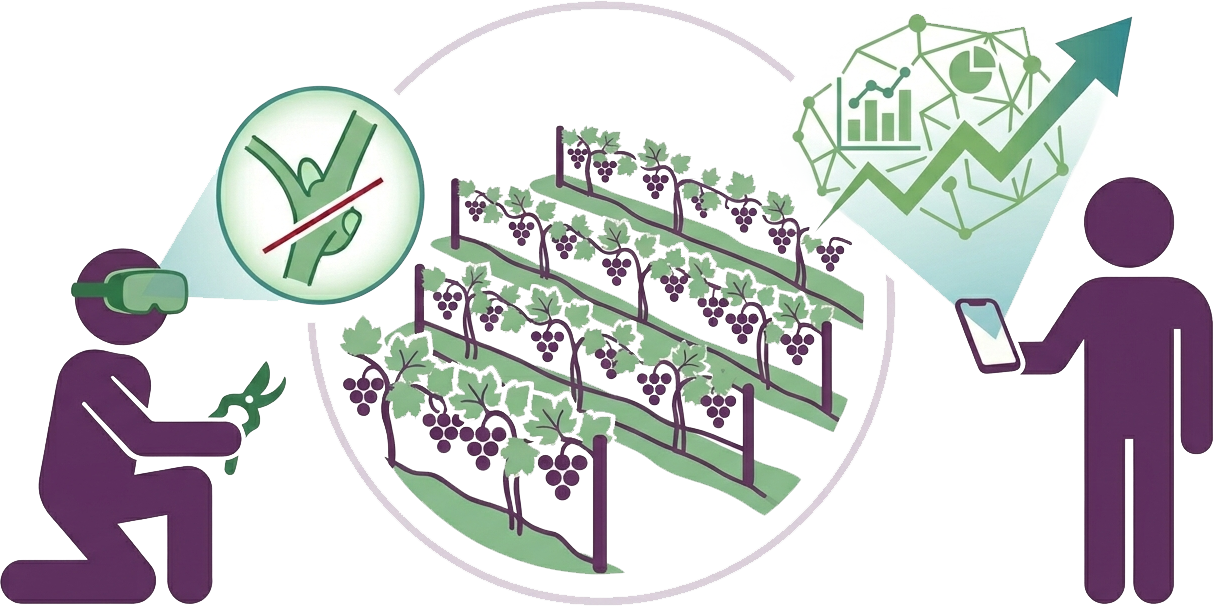
VINNEA addresses a key challenge in the wine sector: the gap between available scientific knowledge on viticultural practices and accessible digital tools for training and field decision-making.
The project proposes to bridge this gap through collaborative and cross-border development of advanced digital technologies: virtual reality, artificial intelligence, predictive models and mobile applications.
What we do exactly at each stage of the project
Initial diagnosis of existing tools, identification of needs and opportunities for the development of new digital solutions in viticulture.
Development of digital modules that can be integrated into pruning teaching and learning tools and towards the robotisation of field tasks.
Predictive models for the characterization of the vine root system (RSA) and immersive digital tools for awareness, training, and vineyard management.
Preparation of pilot actions: methodology, design of content and tools, conditioning of spaces and acquisition of necessary equipment.
Launch of pilot training and experimentation initiatives incorporating the use of digital technologies: Virtual Reality, 3D, AI and other emerging technologies applied to viticulture.
Evaluation of the contribution of new technologies to training and awareness practices, and validation of concepts developed in real context with winegrowers and trainers.
Structuring of a cross-border network of reference entities in the integration of digital tools for the training and teaching of viticultural techniques in the POCTEFA territory.
Dissemination and transfer of the use of new technologies in viticulture training and awareness. Participation in international events such as Laval Virtual 2026 and the Forum Toulouse.
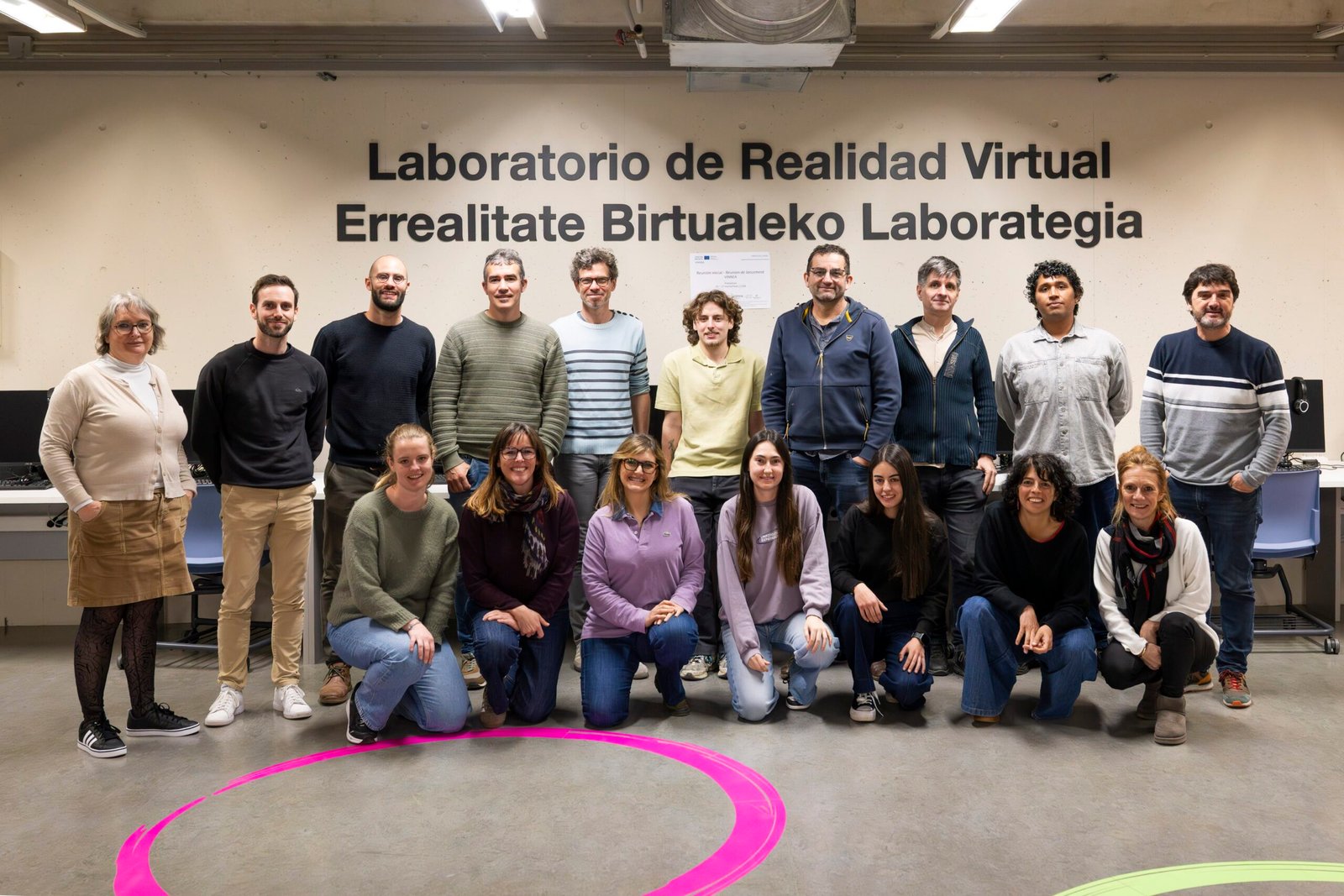
A consortium of six beneficiary partners with complementary profiles: agronomic research, IT, training, engineering and a technology company, complemented by eight associated partners.
Meet the consortium →